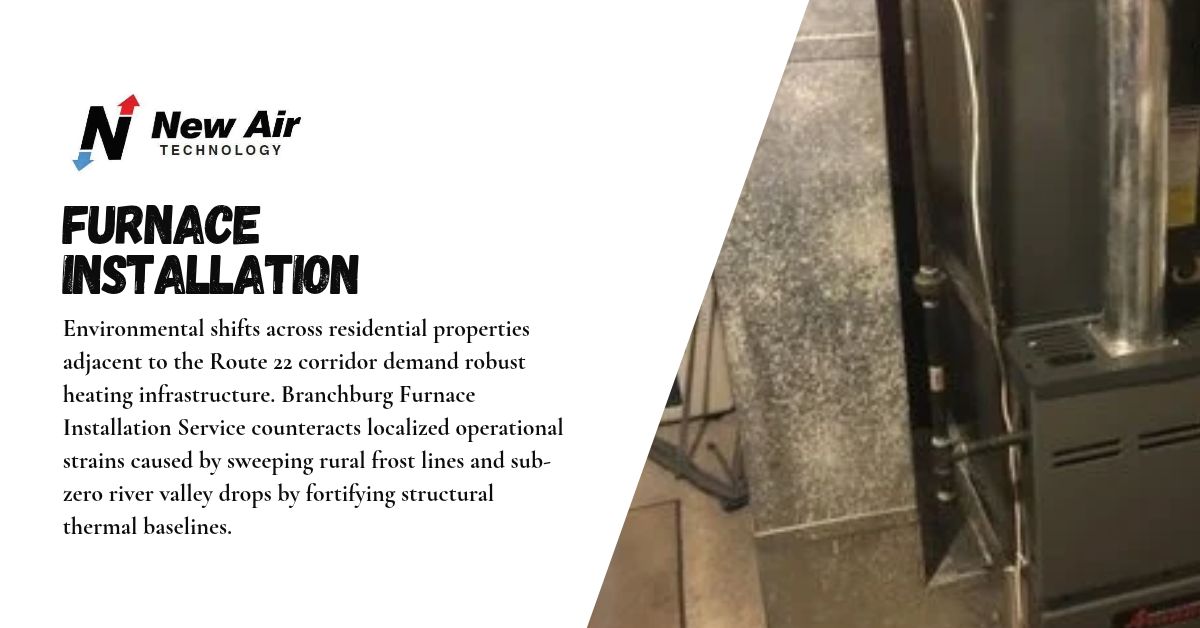
If you’ve already decided your furnace installation service in Branchburg, NJ home needs a new furnace, the next question is which one. Standard-efficiency gas furnaces run in the 80% AFUE range and cost less upfront. High-efficiency condensing furnaces reach 90% to 98.5% AFUE, cost more to install, and pay some of that difference back through lower gas bills over time. The right choice depends less on brand and more on how long you plan to stay in the home, what your existing venting and ductwork can support, and how your specific house is built. This article walks through the mechanical and financial differences so you can have an informed conversation with your installer instead of just picking whatever’s cheapest or whatever a salesperson pushes first.
What “High-Efficiency” Actually Means for a Furnace
Every furnace has an AFUE rating – Annual Fuel Utilization Efficiency – which tells you what percentage of the fuel it burns turns into heat for your home versus what escapes up the flue as exhaust. A furnace rated at 80% AFUE turns 80 cents of every fuel dollar into usable heat; the other 20 cents is lost. A furnace rated at 96% AFUE wastes only 4 cents on the dollar.
The efficiency gap comes down to how the furnace handles its own exhaust. A standard-efficiency furnace has a single heat exchanger and vents hot exhaust gas straight out through a metal flue, which is why it still loses a meaningful chunk of heat. A high-efficiency condensing furnace adds a second heat exchanger that pulls additional heat out of the exhaust before it leaves the house, cooling the exhaust gas enough that it condenses into water – which is where the “condensing furnace” name comes from. That second heat exchanger is the entire reason the efficiency jump is possible, and it’s also why high-efficiency units cost more to manufacture and install.
For a furnace that runs for months at a stretch during a New Jersey winter, that efficiency difference isn’t theoretical. It shows up directly on the gas bill, month after month, for as long as the system is in service.
Single-Stage, Two-Stage, and Modulating Furnaces: The Real Differences
AFUE isn’t the only efficiency variable worth understanding. How a furnace modulates its heat output matters just as much for comfort and, over time, for fuel use.
Single-stage furnaces run at one fixed output: full blast or off. They’re the simplest and least expensive option, but they tend to produce noticeable temperature swings and can feel drafty as the system cycles on and off.
Two-stage furnaces can run at a lower output most of the time and only kick up to full capacity during the coldest stretches. This produces steadier indoor temperatures, quieter operation, and better humidity control, since the furnace runs in longer, gentler cycles instead of short, forceful bursts.
Modulating furnaces adjust output in small increments – often 1% at a time – to match the home’s heat loss as closely as possible. These are the quietest and most consistent systems available, and they’re almost always paired with the highest AFUE ratings, but they’re also the most expensive tier and the most dependent on a correctly sized duct system to perform as designed.
A two-stage or modulating furnace with a lower AFUE rating can sometimes deliver better real-world comfort than a single-stage furnace with a slightly higher AFUE number. Staging and AFUE are related but separate decisions, and a good installer should walk through both rather than selling on the AFUE percentage alone.
Gas or Electric: Matching Fuel Type to Efficiency Goals in Branchburg
Most Branchburg homes with access to natural gas lines install gas furnaces, and for good reason – natural gas is generally the lower-cost fuel option for space heating in this region, and gas furnaces recover quickly from setbacks, which matters when overnight temperatures drop hard.
Homes without gas service, which still exist in pockets of the township, typically look at either oil furnaces or electric heating options, including electric furnaces and heat pump systems. Electric resistance furnaces are simple and reliable but generally cost more to run than gas in this climate, since electricity is a more expensive fuel per unit of heat than natural gas in most of New Jersey. Heat pumps, which move heat rather than generate it, have become more competitive with gas in shoulder seasons and are increasingly paired with a gas or electric furnace as a backup for the coldest days – a hybrid setup sometimes called dual-fuel heating.
The point isn’t that one fuel type is universally correct. It’s that fuel availability at your address, plus how long you plan to stay in the home, should shape the efficiency conversation before AFUE numbers even come up. There’s no upside to specifying a 98% AFUE gas furnace if your home doesn’t have a gas line and running one would mean an expensive utility extension.
The Real Cost Difference Between Standard and High-Efficiency Installation
High-efficiency furnaces cost more than standard-efficiency units, both for the equipment itself and for installation labor, since the venting and condensate handling are more involved. That upfront gap is real and shouldn’t be glossed over.
What closes the gap over time is the operating cost difference. A furnace running at 96% AFUE burns meaningfully less fuel than one running at 80% AFUE to produce the same amount of heat, and that difference compounds every month of the heating season. Whether the higher upfront cost pays for itself depends on a few home-specific factors: how many years you expect to stay in the house, your current gas usage and rates, and whether state or utility rebates offset part of the price difference (more on that below).
As a general rule, homeowners planning to stay in their Branchburg home for a decade or more, or those replacing an older 60–70% AFUE furnace with a modern unit, tend to see the clearest financial case for going high-efficiency. Homeowners installing in a home they plan to sell within a few years, or those replacing a furnace that was already fairly efficient, sometimes find a mid-tier standard system makes more practical sense. There’s no single right answer – it’s a calculation specific to your situation, and a written quote comparing both tiers side by side is the only way to see real numbers for your home.
Venting and Equipment Differences You’ll Notice During Installation
The efficiency tier you choose changes more than the price tag – it changes what the installation itself involves.
Standard-efficiency furnaces vent through a metal flue, typically tied into an existing chimney or an exterior metal vent pipe, because the exhaust gas is still hot enough to need that kind of venting. High-efficiency condensing furnaces vent through PVC pipe instead, run horizontally out a sidewall or vertically through the roof, because the exhaust has already been cooled enough by the second heat exchanger that metal venting isn’t needed – and in most cases isn’t even rated for it.
Condensing furnaces also produce condensate water as a byproduct of that second heat exchanger, which means the installation needs a condensate drain line and often a small condensate pump if there’s no gravity drain nearby. This is a real plumbing consideration, not a minor detail: the drain line needs a viable path to a floor drain, sump, or exterior discharge point, and in colder installation locations it needs to be protected from freezing.
None of this makes a high-efficiency installation harder to do correctly, but it does mean the installer needs to plan for a sidewall penetration and a condensate path before the job starts, not figure it out mid-installation. If your home’s mechanical room doesn’t have an obvious route for PVC venting or condensate drainage, that’s worth discussing with your installer during the initial assessment, since it can affect both cost and furnace placement.
How Branchburg’s Housing Stock Affects the Efficiency Decision
Branchburg has a genuine mix of home ages and construction styles, and that mix affects which efficiency tier actually makes sense.
Older farmhouse-style homes, additions, and properties with less consistent insulation tend to lose heat faster regardless of furnace efficiency, which means the furnace works harder and runs longer through the season. In these homes, pairing a high-efficiency furnace with attention to duct sealing and insulation upgrades tends to deliver a bigger combined payoff than the furnace alone would.
Newer construction with tighter building envelopes and better insulation already loses less heat, so the home may not need as large a furnace to begin with, and the efficiency upgrade shows a smaller absolute dollar difference simply because total fuel use is lower to start with. That doesn’t make high-efficiency a bad choice in a newer home – it just changes the payback math.
Either way, the furnace shouldn’t be evaluated in isolation from the rest of the house. A correctly sized, high-efficiency furnace installed in a home with leaky ductwork or poor insulation will still underperform its rating, which is part of why a proper in-home load calculation and ductwork check matter regardless of which efficiency tier you land on.
NJ Rebates and Incentives Tied to Efficiency Tier
New Jersey offers rebate programs through the NJ Clean Energy Program for qualifying high-efficiency heating equipment, and individual utility companies sometimes run their own rebate programs on top of that, which can occasionally be combined depending on current program rules. Federal tax credits for qualifying high-efficiency HVAC equipment are also available under current energy efficiency incentive rules.
These programs are specifically tied to efficiency thresholds, meaning a standard-efficiency furnace typically won’t qualify, while a high-efficiency unit at or above a certain AFUE rating often will. Since eligibility requirements and rebate amounts change periodically and vary by equipment model, the most reliable approach is to ask your installer which current rebates apply to the specific furnace you’re considering before you finalize your equipment choice, since not every model on the market qualifies even within the same efficiency range.
Common Mistakes Homeowners Make When Choosing Furnace Efficiency
A few patterns show up repeatedly in efficiency decisions that don’t work out well:
- Choosing based on the lowest quoted price without comparing what AFUE and staging level that price actually includes.
- Assuming a higher AFUE number always means a better fit, without considering fuel type, home insulation, or how long they’ll stay in the home.
- Skipping the load calculation and matching the new furnace’s size to the old one, regardless of efficiency tier, undermines the performance of even a high-efficiency system.
- Not asking whether the specific furnace model qualifies for available rebates before signing off on equipment.
- Overlooking venting and condensate requirements until installation day, which can lead to last-minute cost surprises or placement compromises.
Most of these come down to the same root cause: treating the efficiency decision as a single number to compare rather than a system-level choice that touches venting, fuel type, home construction, and how long the investment needs to pay off.
How to Decide: A Simple Framework
If you’re trying to narrow this down without getting lost in specification sheets, a few questions do most of the work:
How long do you plan to stay in this home? Longer ownership generally favors higher efficiency, since there’s more time for fuel savings to offset the higher upfront cost.
What fuel do you currently have, and what would switching cost? Sticking with your existing fuel type usually keeps installation simpler and cheaper than converting.
What condition is your current furnace in, and how old is it? Replacing a furnace that was already reasonably efficient shows a smaller efficiency gain than replacing one that’s 20 years old and running at 65–70% AFUE. Does your mechanical room support PVC venting and a condensate drain path? If not, that’s not a dealbreaker, but it’s a cost and placement factor worth discussing upfront.
Are there rebates available for the models you’re considering? A rebate can meaningfully shift the math toward high-efficiency, so it’s worth confirming before comparing final prices.
When to Bring in a Professional Assessment
Efficiency ratings, staging, venting requirements, and rebate eligibility all interact with each other and with the specifics of your home, which is exactly the kind of decision that benefits from an in-person load calculation rather than a phone estimate or an online furnace-sizing tool. A technician who walks your home, checks your existing ductwork and venting path, and reviews your fuel options can put real numbers next to both a standard and a high-efficiency option so you’re comparing your actual situation rather than generic averages.
Conclusion
New Air Technology standard and high-efficiency furnaces aren’t just different price points on the same product – they’re different systems with different venting requirements, different comfort characteristics, and different payback timelines. The right choice depends on how long you’ll own the home, what fuel and venting path you already have, your home’s construction, and which rebates apply to the specific equipment you’re considering. Getting an in-home assessment and a side-by-side written quote for both efficiency tiers is the most reliable way to see which option actually makes financial and practical sense for your Branchburg property.
FAQs
Is a high-efficiency furnace worth the extra cost in New Jersey?
It depends primarily on how long you plan to stay in the home and your current fuel costs. Homeowners staying a decade or longer, or replacing an old, inefficient furnace, tend to see the clearest financial benefit. A written comparison quote for both tiers is the best way to see the numbers for your specific home.
Can any furnace be converted to PVC venting later, or does that decision have to be made at installation?
The venting method is tied to the furnace’s efficiency tier and is set during installation, not something that can be swapped afterward without replacing the unit. That’s why fuel type, efficiency rating, and venting path should all be decided together before installation begins.
Do high-efficiency furnaces require more maintenance than standard ones?
They have an additional heat exchanger and a condensate drain line, which adds a couple of items to a technician’s annual maintenance checklist, but the overall maintenance frequency – generally once a year – stays the same as a standard-efficiency furnace.
Will a high-efficiency furnace fit in the same location as my old furnace?
Often yes, but not always. Because condensing furnaces need a PVC vent path to an exterior wall or roof and a condensate drain route, the ideal location sometimes shifts slightly from where a standard metal-vented furnace was installed. This is something an installer should evaluate during the in-home assessment.
Are two-stage and modulating furnaces only available in high-efficiency models?
Not exclusively, but in practice, most two-stage and nearly all modulating furnaces on the market are built with high-efficiency AFUE ratings, since manufacturers pair advanced staging technology with their higher-end product lines.