If your furnace struggled last winter, made strange noises, or simply refused to keep the whole house warm, you’re probably already thinking about furnace installation services in Branchburg, NJ before the cold weather returns. That’s smart timing. Branchburg winters swing from mild to genuinely cold within the same week, and a furnace that’s on its last legs tends to fail on the coldest night of the year, not the mildest one. This guide walks through everything a homeowner actually needs to know: how to tell it’s time for a new system, how sizing and efficiency work, what a professional installation involves step by step, what permits are required in Branchburg Township, what it typically costs, and how to pick an installer you can trust.
Why Branchburg Homeowners Can’t Afford to Guess on Furnace Installation
Branchburg sits in western Somerset County, close to Route 22 and Interstate 287, in a spot where summers get hot and humid, and winters hover around freezing with regular cold snaps well below it. That swing matters more than most homeowners realize. A furnace sized or installed poorly might limp through a mild January, but the first real cold stretch will expose every weakness, whether that’s short-cycling, uneven heat between rooms, or a system that simply can’t keep up.
The township also has a mix of housing stock, from older farmhouse-style homes built decades ago to newer developments with tighter building envelopes. Older homes near the South Branch of the Raritan River sometimes have basements with higher moisture exposure or occasional flood risk, which affects where a furnace should be placed and how it should be protected. None of this is something a homeowner should have to figure out alone, and it’s exactly why local knowledge matters more than a generic install.
Signs Your Branchburg Home Needs a New Furnace, Not Another Repair
Not every heating problem means you need a full replacement. But there’s a point where repeated repairs stop making financial sense. Here are the signs worth paying attention to:
- Age. Most furnaces last 15 to 20 years. If yours is in that range, even a working unit is operating at reduced efficiency.
- Rising energy bills without a change in usage habits, which usually points to a furnace losing efficiency as it ages.
- Frequent repairs. If you’ve called for service more than once or twice in the last two years, the cost of ongoing repairs often outweighs the cost of replacement.
- Uneven heating, where some rooms stay cold no matter how high the thermostat is set.
- Strange sounds like banging, rattling, or a burner that clicks repeatedly before igniting.
- Yellow burner flame instead of blue, which can indicate a combustion problem and should be checked immediately for safety.
- Visible rust, cracking, or corrosion on the unit itself or the heat exchanger.
If two or more of these apply, it’s worth getting a professional assessment rather than scheduling another one-off repair.
Choosing the Right Furnace Size and Type for Your Branchburg Property
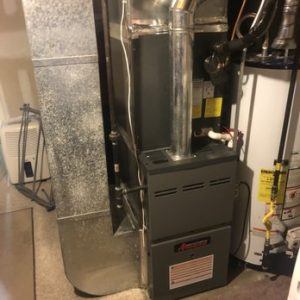
This is where a lot of installations go wrong, and it’s rarely the homeowner’s fault. It’s common for a contractor to simply match the new furnace to the size of the old one without recalculating anything. That approach ignores changes in insulation, windows, additions, or duct modifications made over the years.
Understanding AFUE Ratings
AFUE, or Annual Fuel Utilization Efficiency, measures how much of the fuel a furnace burns actually turns into usable heat versus how much escapes as exhaust. A furnace rated at 80% AFUE converts 80 cents of every fuel dollar into heat. High-efficiency furnaces reach 90 to 98.5% AFUE, meaning far less waste and lower monthly heating costs, though the upfront investment is higher. For Branchburg’s climate, where the heating season runs several months, the efficiency gap adds up quickly over the life of the system.
Gas, Oil, or Electric: What Makes Sense in Somerset County
Most Branchburg homes on natural gas lines choose gas furnaces for their lower operating cost and fast, consistent heat output. Homes without gas access, which is still common in parts of the township, often rely on oil furnaces or are exploring a switch to electric heat pump systems, particularly with current federal and state incentives favoring electrification. Each option has trade-offs in upfront cost, fuel availability, and long-term operating expense, and a good installer should walk through all three rather than pushing one option by default.
Why Sizing Matters More Than Brand
A furnace that’s too large for the home will short-cycle, turning on and off repeatedly, which wastes energy and wears out components faster. One that’s too small will run constantly and still fail to heat the home evenly. The correct approach is a Manual J load calculation, an industry-standard formula that accounts for square footage, insulation levels, window count and type, ceiling height, and local climate data. Skipping this step is the single most common reason homeowners end up unhappy with a brand-new system.
What a Professional Furnace Installation Actually Involves
A proper installation is more involved than swapping one box for another. Here’s what the process typically looks like:
- In-home assessment and load calculation. A technician evaluates the home’s size, layout, insulation, and existing ductwork, then runs a Manual J calculation to determine the correct furnace size.
- System and equipment selection. Based on the assessment, fuel type, budget, and efficiency goals, the homeowner and installer agree on the right unit.
- Ductwork inspection. Existing ducts are checked for leaks, damage, or sizing issues, since even a perfect furnace will underperform on a leaky or undersized duct system.
- Removal of the old unit. The existing furnace is safely disconnected and removed, including proper disposal.
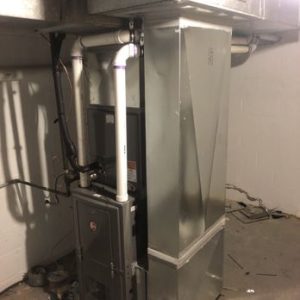
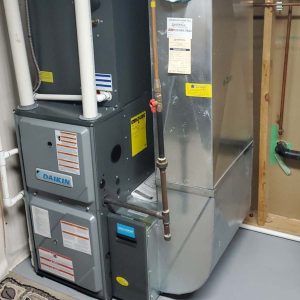
- Installation of the new furnace, including gas or electrical connections, venting, condensate lines (for high-efficiency units), and thermostat wiring.
- System testing and calibration. The technician tests ignition, airflow, temperature rise, and safety controls, and checks for gas leaks or exhaust issues.
- Walkthrough and documentation. The homeowner gets a rundown of the new system’s operation, warranty paperwork, and maintenance recommendations.
A same-day or next-day install is realistic for most residential jobs once the equipment and permits are in place, though ductwork repairs or electrical upgrades can extend the timeline.
Permits, Codes, and Inspections in Branchburg Township
New Jersey requires a permit for furnace installation and replacement in nearly all municipalities, and Branchburg Township is no exception. A licensed contractor pulls the permit on the homeowner’s behalf, and the job must pass inspection by the local construction official before it’s considered complete. This isn’t just paperwork. It confirms the installation meets current code for venting, clearances, gas or electrical connections, and combustion air requirements, all of which affect both safety and insurance validity.
Skipping permits to save time or money is a real risk. Unpermitted HVAC work can complicate a home sale, void manufacturer warranties, and in a worst case, create a genuine safety hazard from improper venting or gas connections. Any installer who suggests skipping the permit process is a red flag, not a convenience.
What Furnace Installation Costs in Branchburg (and How to Lower It)
Furnace installation cost depends on several factors: the size and type of furnace, the efficiency rating chosen, whether ductwork modifications are needed, the complexity of venting, and local labor rates. As a general guide, standard efficiency gas furnace installations tend to fall on the lower end of the residential HVAC price range, while high-efficiency condensing furnaces, oil-to-gas conversions, or installations requiring significant ductwork rework land on the higher end. Getting a detailed, written quote after an in-home assessment is the only reliable way to know your actual number, since online estimates rarely account for your home’s specific setup.
Rebates and Incentives Available to NJ Homeowners
New Jersey homeowners have access to several programs that can meaningfully reduce the cost of a high-efficiency furnace installation:
- NJ Clean Energy Program rebates for qualifying high-efficiency heating equipment.
- Utility company rebates, which vary by provider and are sometimes stackable with state programs.
- Federal tax credits under current energy efficiency incentive rules for qualifying high-efficiency systems.
These programs change periodically, so it’s worth asking your installer which rebates currently apply and confirming eligibility requirements before you finalize equipment selection, since not every model qualifies.
How to Choose the Right Furnace Installer in Branchburg
The installer matters as much as the equipment. Even the best furnace on the market will underperform with a rushed or careless installation. Look for:
- Proper licensing and insurance for HVAC work in New Jersey.
- A willingness to do a load calculation rather than just matching the old unit’s size.
- Transparent, itemized pricing before work begins, not a vague verbal estimate.
- Manufacturer certifications for the brands they install.
- Local experience in Branchburg and Somerset County specifically, since local contractors understand the permitting process and common housing quirks in the area.
- A clear warranty explanation, covering both equipment and labor.
Questions to Ask Before Signing
Ask any installer you’re considering: Will you perform a Manual J load calculation? Are you pulling the required Branchburg Township permit? What’s included in the written quote, and are there any likely additional charges? What warranty applies to both parts and labor? A confident, specific answer to each of these is a good sign you’re dealing with a legitimate, experienced contractor.
Life After Installation: Keeping Your New Furnace Running Efficiently
A new furnace is a long-term investment, and how it’s maintained affects both its lifespan and its efficiency. A few habits make a real difference:
- Change air filters every one to three months, more often if you have pets or allergy concerns.
- Schedule annual maintenance, ideally before the heating season starts, to catch small issues before they become expensive repairs.
- Keep vents and returns unblocked by furniture or storage.
- Watch for early warning signs, like inconsistent heating or unusual sounds, and address them quickly rather than waiting.
- Consider a programmable or smart thermostat to reduce unnecessary run time and lower energy costs.
Systems that get consistent annual maintenance tend to run more efficiently and experience fewer unexpected breakdowns than those left unchecked year after year.
Conclusion
Furnace installation in Branchburg, NJ isn’t just about picking a unit and getting it hooked up. It’s a decision that touches sizing accuracy, local permitting, fuel type, efficiency rating, and who you trust to do the physical work. Homes in this area deal with real winter cold, occasionally humid basements, and a range of building ages, so a one-size-fits-all approach rarely serves homeowners well. Taking the time to understand load calculations, ask the right questions, and confirm permits and rebates upfront leads to a system that actually performs the way it should, winter after winter. When you’re ready to move forward, a licensed local installer who’s familiar with Branchburg Township’s specific requirements is worth more than the lowest quote in your inbox.
————————————–
FAQ’s
How much does furnace installation cost in Branchburg, NJ?
Cost depends on furnace size, efficiency rating, and whether ductwork needs work. Standard-efficiency systems typically cost less than high-efficiency or oil-to-gas conversions. A written quote after an in-home assessment gives the most accurate number for your specific home.
How long does a furnace installation take?
Most standard residential installations are completed in a single day. Jobs requiring ductwork repairs, electrical upgrades, or a fuel-type conversion can take longer, sometimes spanning two days depending on complexity.
What size furnace do I need for my Branchburg home?
The right size comes from a Manual J load calculation, which factors in square footage, insulation, windows, and ceiling height. Simply matching the size of your old furnace often leads to inefficient heating and higher energy bills.
Do I need a permit to install a furnace in Branchburg Township?
Yes. New Jersey requires a permit for furnace installation and replacement, and the job must pass a local inspection. A licensed contractor typically pulls this permit as part of the installation process.
What is the best time of year to install a new furnace in NJ?
Late summer or early fall is ideal, before demand and temperatures rise. Installing before the first cold snap avoids emergency pricing and gives you time to address any issues before you actually need the heat.
How often should a new furnace be serviced after installation?
Annual maintenance, ideally scheduled before the start of the heating season, keeps a new furnace running efficiently and helps catch small issues before they turn into costly repairs or premature system failure.