If your building feels too warm in some rooms and too cold in others, or your last few energy bills have climbed for no clear reason, your commercial HVAC system is probably trying to tell you something. Most equipment failures don’t happen without warning – they build up over weeks or months through small performance issues that are easy to dismiss until the system fails outright, often during the coldest or hottest week of the year.
This guide walks through the seven most common signs that a commercial HVAC repair service in Branchburg needs professional attention, how to tell the difference between a repair issue and a system nearing the end of its life, and what routine maintenance can do to prevent both. It’s written for business owners, property managers, and facilities staff who want to understand what’s happening with their equipment before deciding on next steps.
Why Commercial HVAC Systems in Branchburg Face Extra Strain
Central New Jersey sees a wide swing in operating conditions over a single year. Summers bring stretches of high heat and humidity that push cooling systems to run near-continuously, while winters bring sustained cold that keeps heating equipment under similar strain. Commercial units – whether rooftop packaged units, split systems, or larger built-up systems – are generally sized to handle these seasonal extremes, but that only holds true when the equipment is well maintained and properly matched to the building’s load.
Older commercial buildings in the area, along with retrofitted retail and office spaces, often have HVAC systems that were sized for a different layout, occupancy level, or equipment load than what’s currently in the space. That mismatch is one of the most common – and least visible – causes of the performance problems described below.
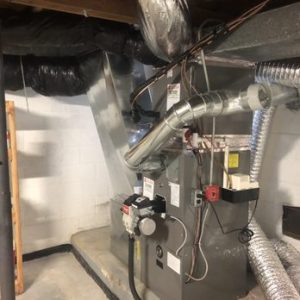
7 Signs Your Commercial HVAC System Needs Repair
Inconsistent Temperatures Throughout the Building
One area of the building runs cold while another stays warm, even with the thermostat set correctly. This is usually a sign of airflow restriction, a failing damper, duct leaks, or a system that’s undersized for the space. In multi-zone commercial buildings, it can also point to a zoning control issue rather than the HVAC unit itself. Either way, uneven temperatures are rarely something that resolves on its own – they tend to get more pronounced as the underlying component wears further.
Rising Energy Bills Without a Change in Usage
If your building’s occupancy, hours, and equipment load haven’t changed but your utility costs have gone up, the HVAC system is likely working harder than it should to deliver the same result. Common causes include a dirty or failing coil, a refrigerant leak, a struggling compressor, or a blower motor running outside its normal range. A system operating at reduced efficiency doesn’t usually give an obvious signal – the energy bill is often the first place it shows up.
Frequent Repairs or Recurring Breakdowns
A single repair is normal wear and tear. Two or three unrelated repairs within a year is a pattern worth paying attention to. When a system needs recurring service calls – even for different components each time – it’s often a sign that the unit as a whole is reaching the point where individual part failures are becoming more frequent, which is a common indicator that replacement will be more cost-effective than continued repair.
Unusual Noises or Odors From the System
Grinding, screeching, rattling, or a repeated clicking sound usually points to a mechanical issue – a failing bearing, a loose belt, or a motor under strain. Musty or burning smells are different: a musty smell often indicates moisture buildup or mold growth inside the ductwork or unit, which is also an indoor air quality concern, while a burning smell can indicate an electrical issue and should be treated as urgent. Neither should be left unaddressed, since both tend to indicate a problem that will worsen with continued operation.
Poor Indoor Air Quality
Employees or customers noticing stuffiness, more dust than usual, or humidity that feels consistently high or low can be a sign that the HVAC system isn’t properly filtering, dehumidifying, or circulating air. In commercial spaces, poor air quality is also frequently tied to a system that’s undersized for current occupancy, or that hasn’t had filters and coils serviced on a regular schedule. This is one of the more overlooked signs, since it’s easy to attribute to the building itself rather than the mechanical system behind it.
Short Cycling or a System That Won’t Turn Off
Short cycling – where the system turns on and off in rapid, short bursts – puts extra wear on the compressor and other components, and it’s a sign that something is preventing the unit from completing a normal heating or cooling cycle. On the opposite end, a system that runs continuously without reaching the set temperature is often struggling with a refrigerant issue, a failing part, or a mismatch between the unit’s capacity and the space it’s serving. Both patterns tend to get worse rather than resolve on their own, and both typically point to a need for diagnostic service.
The System Is Approaching or Past Its Expected Service Life
Most commercial HVAC equipment is designed to perform reliably for roughly 15–20 years with consistent maintenance, though this varies by equipment type and usage. As a system approaches that range, the cost and frequency of repairs typically increase, and efficiency tends to decline even when the unit is otherwise functioning. Knowing the age and service history of your system is one of the most useful pieces of information when deciding whether the next issue should be repaired or is a sign to start planning for replacement.
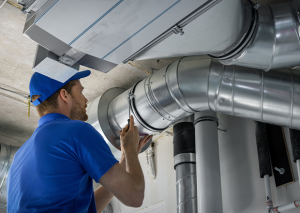
Repair or Replace? How to Weigh the Decision
There’s no single rule that applies to every situation, but a few questions tend to clarify the decision:
How old is the unit? A system in the first half of its expected service life is usually worth repairing. One at or beyond that range warrants a closer look at replacement, especially if the repair is a major component.
Is this a recurring issue or a first-time repair? A single, isolated failure is different from the third service call in a year for unrelated problems.
What does the repair cost relative to a new system? A widely used guideline in the industry is that if a repair costs more than a third to half of what a new system would cost, replacement often makes more financial sense – particularly on an older unit.
Has the building’s use changed? A space that’s been renovated, had equipment added, or seen occupancy increase since the system was installed may simply be outgrowing its original HVAC capacity, in which case repair won’t resolve the underlying mismatch.
A technician who inspects the actual equipment and reviews its service history will give you a more accurate answer than any general rule – but going into that conversation with these questions in mind helps you evaluate the recommendation you’re given.
The Role of Routine Maintenance in Preventing These Problems
Most of the issues above don’t appear suddenly. They develop gradually, and routine maintenance is what catches them early – before a strained component turns into a full breakdown.
A typical commercial maintenance visit generally includes:
- Inspecting and cleaning coils, which lose efficiency as dirt and debris build up
- Checking refrigerant levels and looking for signs of leaks
- Testing electrical connections and components for wear
- Inspecting belts, bearings, and moving parts for early signs of failure
- Changing or cleaning filters, which affects both airflow and air quality
- Verifying that controls, thermostats, and zoning systems are functioning correctly
- Checking condensate drains to prevent water damage and moisture-related air quality issues
For most commercial systems, a maintenance visit twice a year – typically once before the cooling season and once before the heating season – is enough to catch developing issues before they become repaired. Buildings that run equipment for longer hours, such as restaurants or facilities with heat-generating equipment, may benefit from more frequent checks.
Beyond preventing breakdowns, consistent maintenance is also one of the more effective ways to manage energy costs, since a well-maintained system uses less energy to deliver the same heating or cooling output than one that’s been neglected.
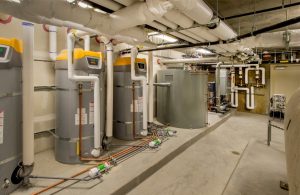
What to Consider If You’re Facing a Commercial HVAC Installation
If repair costs, system age, or a building renovation have you thinking about a new system, a few factors are worth understanding before the conversation with a contractor:
Proper sizing matters more than brand or price. A unit that’s too large for the space will short cycle and wear out prematurely; one that’s too small will run constantly and still struggle to maintain temperature. A load calculation based on the building’s actual size, insulation, occupancy, and equipment load – not just a replacement of the old unit’s capacity – is the right starting point.
Efficiency ratings affect long-term operating cost. Commercial units vary in efficiency, and a higher-efficiency system typically costs more upfront but less to run over its lifespan. The right balance depends on how long you plan to occupy the building and your budget for the project.
Installation quality affects performance as much as the equipment itself. Even a well-matched, efficient unit will underperform if ductwork, refrigerant lines, or electrical work aren’t installed correctly. This is a good area to ask direct questions about during the quoting process.
Timing can reduce disruption. Scheduling installation during a slower business period, or in shoulder seasons like spring or fall, generally reduces the impact on daily operations compared to installing during peak summer or winter demand.
When to Call for Commercial HVAC Repair vs. When It’s an Emergency
Not every issue needs same-day attention, but some do. A complete loss of heating or cooling during extreme outdoor temperatures, a burning smell, visible water leaking near electrical components, or a system that won’t shut off should be treated as urgent – both for occupant safety and to limit further damage to the equipment. Less urgent issues, like a minor temperature inconsistency in one zone or a slightly noisier-than-usual unit, are still worth scheduling service for soon, since they tend to progress into larger problems if left unaddressed.
Conclusion
Commercial HVAC problems rarely appear out of nowhere – they build gradually through the signs covered above, from uneven temperatures to rising energy costs to recurring repairs. Recognizing them early gives you more options, whether that means a straightforward repair or planning for a replacement on your own timeline instead of during an emergency. If your Branchburg business is dealing with any of these warning signs, New Air Technology can evaluate the system and walk you through the most cost-effective path forward. Call (908) 373-8305 to schedule service.
FAQs
How long does a commercial HVAC repair typically take?
It depends on the issue. Simple repairs, like replacing a capacitor or fixing a minor electrical connection, can often be completed in a single visit. More involved repairs – such as a compressor replacement or major refrigerant leak repair – may take longer, particularly if parts need to be ordered for the specific make and model of equipment.
Can a commercial HVAC system be repaired if it’s already 15+ years old?
In many cases, yes, but it’s worth weighing the repair cost against the likelihood of additional issues developing soon after. A technician can assess the specific component that’s failed and the overall condition of the unit to help determine whether repair or replacement is the more practical choice.
What’s the difference between commercial and residential HVAC repair?
Commercial systems are generally larger, more complex, and often involve rooftop units, multi-zone controls, or built-up systems that residential technicians aren’t equipped to service. Commercial HVAC work also typically needs to account for business operating hours, occupancy patterns, and code requirements specific to commercial buildings.
How often should a business schedule HVAC maintenance?
Twice a year is the general standard for most commercial systems – once before cooling season and once before heating season. Businesses with equipment that runs longer hours or generates additional heat, such as restaurants or facilities with server rooms, may benefit from more frequent checks.
Is it worth repairing a commercial HVAC system that keeps breaking down?
If the same or related issues keep recurring, continued repair often ends up costing more than replacement over time. A pattern of frequent breakdowns is one of the clearer signs that the system, rather than an individual part, is the underlying problem.