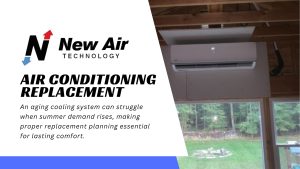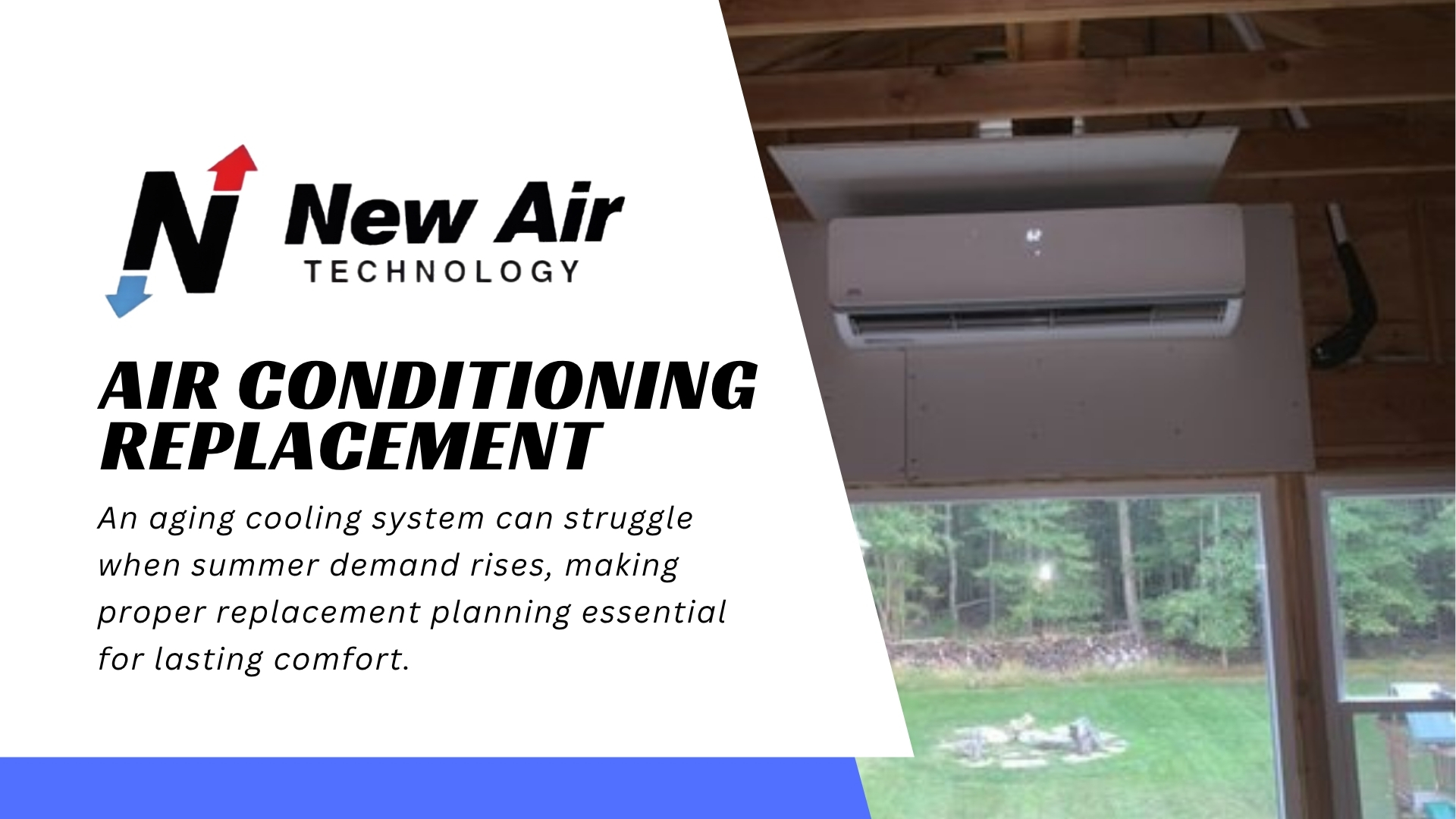
If your air conditioner is struggling to keep your Branchburg home cool, cycling on and off constantly, or costing more to run every summer, you’re likely facing one of the clearest signals that replacement – not another repair – is the smarter move. Most central air conditioners last 12 to 15 years, and once a system passes that mark, repairs tend to become more frequent, more expensive, and less effective. This article walks through the specific signs that point to replacement, how system age and repair costs factor into the decision, what affects the cost of a new system, and what to consider when choosing a replacement for a Branchburg home.
This guide is written for homeowners who are noticing problems with their current system and trying to decide whether it’s worth repairing or time to start looking at new equipment. It won’t walk you through the installation process itself – for that, our air conditioning replacement service in Branchburg page covers what to expect from a New Air Technology installation.
How Long Should an AC Unit Last?
Central air conditioners in the Branchburg area typically run for 12 to 15 years with regular maintenance. Some systems make it to 18 or 20 years, but that’s usually the exception rather than the rule, and those older units are almost always working harder and less efficiently than they should be.
A few factors influence how long a specific system lasts:
- Maintenance history. Units with annual tune-ups and regular filter changes tend to outlast neglected systems by several years.
- Sizing. An AC unit that was undersized or oversized for the home when it was installed wears out faster because it’s constantly working outside its ideal range.
- Usage patterns. Systems that run nearly nonstop through long, humid New Jersey summers accumulate more wear than units in milder climates.
- Installation quality. Poor initial installation – incorrect refrigerant charge, leaky ductwork, improper airflow – shortens a system’s effective lifespan even if the equipment itself is high quality.
If your system is approaching or past the 12-15 year mark, age alone is a reason to start planning for replacement, even if it’s still technically running.

Your AC Is Struggling to Keep Up
An aging or failing AC unit often loses its ability to maintain a consistent, comfortable temperature. You might notice:
- Rooms that never quite reach the thermostat setting, especially on the hottest days
- Noticeably warm or humid air coming from the vents
- The system running for hours without the house feeling any cooler
- Uneven cooling between floors or rooms that used to feel fine
This is usually a sign that the compressor is losing efficiency, refrigerant levels are low, or the system was never sized correctly for the home’s square footage. In some cases, a repair can restore performance temporarily. In an older unit, though, it’s often a sign the equipment is nearing the end of its useful service life.
Rising Energy Bills Without Increased Usage
If your cooling costs have crept up year over year, even though your household habits haven’t changed, your AC system is likely losing efficiency as its components wear down. Aging compressors, worn fan motors, and degraded refrigerant lines all force a system to use more electricity to produce the same amount of cooling.
Newer, high-efficiency air conditioning systems are built to much tighter efficiency standards than units installed even a decade ago. Replacing an aging system with a properly sized, energy-efficient model is one of the most direct ways to bring monthly cooling costs back down, particularly during peak summer months when the system is running the most.
Frequent or Costly Repairs
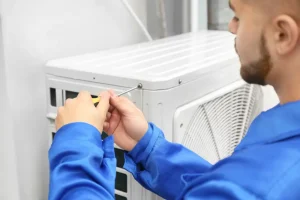
Every AC system needs occasional repairs, but a pattern of repeated service calls is a meaningful signal. A useful way to evaluate this is the 50% rule: if the cost of a repair is more than 50% of the cost of a new system, replacement is typically the more sound financial decision.
It’s also worth tracking repair frequency over time. A system that needed one repair in the last five years is in a very different position than one that’s needed three repairs in the last two years. Recurring breakdowns usually mean the underlying components are wearing out across the board, not just in the one area being repaired each time.
Your System Uses R-22 Refrigerant
Older air conditioning systems – generally those installed before 2010 – were often designed to run on R-22 refrigerant, commonly known by the brand name Freon. R-22 production and import were phased out in the United States as part of an environmental phase-down, which means the refrigerant is harder to find and significantly more expensive when a system needs a recharge.
If a technician tells you your unit uses R-22 and needs a refrigerant recharge, that’s usually a clear indicator it’s time to consider replacement rather than repair. Newer systems use more environmentally friendly refrigerants that are widely available and don’t carry the same cost premium.
Strange Noises or Odors
Occasional operational sounds are normal, but certain noises point to a system in decline:
- Grinding or squealing often points to a failing motor bearing
- Banging or clanking can indicate a loose or broken internal component
- Hissing may signal a refrigerant leak
- Musty or burning odors from the vents can indicate mold growth in the ductwork or an electrical issue in the unit
These issues can sometimes be repaired individually, but when they start showing up together or repeatedly in an older system, they’re often signs of broader mechanical decline rather than isolated problems.
Excess Humidity Indoors
A properly functioning central air system does more than lower the temperature – it also removes humidity from the air as it cools. If your home feels sticky or damp even with the AC running, or you’re noticing condensation on windows or a musty smell, your system may no longer be dehumidifying effectively.
This is common in aging units where the evaporator coil isn’t removing moisture the way it used to, or in systems that were undersized for the home’s square footage from the start. Left unaddressed, excess indoor humidity can contribute to mold growth and general discomfort throughout Branchburg’s humid summer months.
The System Is Simply Old
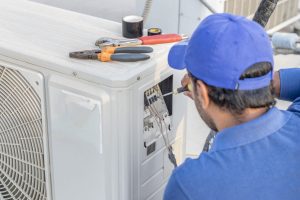
Even a unit that seems to be “running fine” can be worth replacing once it passes the 12-15 year mark. Older systems:
- Use older refrigerants that are being phased out
- Operate at lower efficiency standards than current models
- Are more likely to fail unexpectedly during peak summer heat
- Often can’t be paired with modern smart thermostats and zoning systems as effectively
Replacing a system proactively, before it fails, gives you time to research options and schedule installation on your timeline rather than making a rushed decision during a July heat wave with no working AC.
Repair vs. Replace: How to Decide
When you’re facing a decision between fixing your current system and replacing it, a few questions can help clarify the right path:
- How old is the system? Under 10 years with a manageable repair cost usually favors repair. Over 12-15 years generally favors replacement.
- What will the repair cost be, relative to a new system? Apply the 50% rule mentioned above as a starting point.
- How often has it needed repairs recently? A single isolated repair is different from a pattern of recurring issues.
- Does it use R-22 refrigerant? If so, replacement is usually the more practical long-term choice.
- How is your energy bill trending? Rising costs without changed usage suggest declining efficiency that a repair won’t fully resolve.
- Is the system still under warranty? A repair may make more sense if labor or parts are still covered.
There’s no single rule that applies to every situation, and the right answer depends on the specific system and how it’s been maintained. A technician who inspects the equipment directly can usually tell you within one visit whether a repair is a reasonable fix or a temporary patch on a system that’s on its way out.
What Affects the Cost of AC Replacement
Several factors influence what a new system will cost to install in a Branchburg home:
- System size and capacity. Correctly sizing the unit to your home’s square footage, insulation, and layout affects both upfront cost and long-term efficiency.
- Efficiency rating (SEER2). Higher-efficiency systems typically cost more upfront but reduce monthly energy bills over the system’s lifespan.
- Ductwork condition. If existing ductwork needs repair, sealing, or modification to work with a new system, that adds to the overall project scope.
- Equipment brand and features. Variable-speed compressors, smart thermostat compatibility, and advanced filtration options vary in price.
- Removal and disposal of the old unit. Proper removal of the existing system, including refrigerant recovery, is part of a complete replacement job.
- Home-specific installation factors. Access to the outdoor unit, electrical panel capacity, and existing line set condition can all affect labor time.
Because every home is different, the most accurate way to understand replacement cost is a direct in-home assessment rather than a general estimate.
What to Consider When Choosing a New System
Once you’ve decided replacement makes sense, a few factors are worth thinking through:
- Correct sizing for your home. Bigger isn’t always better – an oversized unit short-cycles and struggles to dehumidify properly, while an undersized one runs constantly and still can’t keep up.
- Efficiency rating. Look at the SEER2 rating and compare projected energy savings against the higher upfront cost of more efficient models.
- Compatibility with existing ductwork. Not every system pairs seamlessly with your home’s current duct layout.
- Warranty coverage. Compare manufacturer warranties on parts and compressors, as well as labor warranties from the installer.
- Smart thermostat and zoning compatibility. If you’re interested in zoned cooling or smart home integration, confirm the new system supports it.
A qualified technician can walk through these options based on your specific home rather than a one-size-fits-all recommendation.
Conclusion
An aging AC system rarely fails without warning signs. Struggling to maintain temperature, rising energy bills, frequent repairs, R-22 refrigerant, unusual noises, excess indoor humidity, and simple system age are all indicators worth paying attention to before a complete breakdown forces a rushed decision. If your system is showing one or more of these signs, having it evaluated by a professional can clarify whether a repair will genuinely solve the problem or whether replacement is the more practical path forward.
For homeowners in Branchburg who are ready to explore replacement options, New Air Technology provides air conditioning replacement services tailored to New Jersey homes. Visit New Air Technology to learn more or get in touch, or call (908) 373-8305 to speak with the team directly.
FAQs
How do I know if my AC needs to be replaced or just repaired?
Generally, if your system is under 10 years old and the repair cost is reasonable relative to the system’s value, repair is usually the better option. If the unit is over 12-15 years old, uses R-22 refrigerant, or the repair cost exceeds roughly 50% of a new system’s price, replacement tends to be the more practical long-term choice.
How long does an AC replacement take?
Installation timelines vary based on the scope of the project, including whether ductwork modifications are needed. A straightforward replacement of comparable equipment is typically completed faster than a project that also involves ductwork changes or electrical upgrades.
Will a new AC system actually lower my energy bills?
In most cases, yes. Older systems lose efficiency as components wear down, and replacing one with a correctly sized, higher-efficiency model typically reduces the electricity needed to cool the same space, especially compared to a system that’s 15+ years old.
Can I replace just the outdoor unit and keep my old indoor unit?
It’s sometimes possible, but mismatched components (an old evaporator coil paired with a new condenser, for example) often reduce efficiency and can shorten the lifespan of the new equipment. Most technicians recommend replacing matched components together for the best performance and warranty coverage.
What time of year is best to replace an AC unit?
Replacing a system before it fails – often in spring or early summer – gives you more flexibility with scheduling and avoids the stress of being without cooling during peak heat. That said, replacement can be done at any time of year if the current system fails unexpectedly.