If your air conditioner is running but the air coming out isn’t cold – or it’s blowing warm air entirely – the cause is usually one of a short list of mechanical or electrical issues. Some, like a dirty air filter, are simple enough to check yourself in a few minutes. Others, like a refrigerant leak or a failing compressor, need a licensed HVAC technician to diagnose safely.
This guide walks through the most common reasons a central air conditioning repair In Branchburg system stops cooling a Branchburg home, what each one typically looks and sounds like, which ones you can troubleshoot on your own, and which ones signal it’s time to call for professional AC repair.
Why Your AC Might Not Be Cooling
A central air conditioning system cools a home through a cycle: refrigerant absorbs heat from indoor air at the evaporator coil, that heat is carried outside and released at the condenser, and a blower pushes the now-cooled air back through the ductwork. When any part of that cycle is interrupted – a blocked filter, a refrigerant leak, a stuck thermostat, a failing compressor – cooling performance drops or stops altogether. Here are the causes that show up most often.
Dirty or Clogged Air Filters
A clogged filter is the single most common reason an AC system underperforms. When the filter is packed with dust and debris, airflow across the evaporator coil drops sharply. Reduced airflow means less heat gets absorbed from the air passing through, so the air coming out of your vents feels lukewarm instead of cold. In more severe cases, restricted airflow causes the evaporator coil itself to freeze over, which shuts down cooling almost entirely.
What it looks like: Weak airflow from vents, warm or barely-cool air, and the system running longer than usual to reach the set temperature.
What you can check: Pull the filter and hold it up to a light. If you can’t see light through it, it needs to be replaced. Standard 1-inch filters generally need changing every 30–90 days, more often if you have pets or run the system heavily during summer.
Refrigerant Leaks
Refrigerant is the substance that actually absorbs and releases heat inside the system. Unlike fuel, it isn’t consumed during normal operation – if refrigerant levels are low, it’s because refrigerant is leaking out somewhere in the line set, coil, or connections. Low refrigerant means the system can’t absorb enough heat from indoor air, so it blows air that’s only slightly cooler than room temperature.
What it looks like: Warm air from vents, hissing or bubbling sounds near the indoor or outdoor unit, ice forming on the refrigerant lines or evaporator coil, and rising energy bills as the system runs longer to try to compensate.
Why this isn’t a DIY fix: Refrigerant handling is regulated under the EPA’s Clean Air Act, and locating a leak often requires specialized detection equipment. A technician needs to find and seal the leak, then properly recharge the system – simply “topping off” refrigerant without fixing the leak is a temporary and often costly band-aid.
Thermostat Problems
Sometimes the AC unit itself is working fine, but the thermostat isn’t communicating with it correctly. This can happen due to dead batteries, incorrect settings, wiring issues, or a thermostat that’s aging out and misreading the temperature.
What it looks like: The system won’t turn on at all, cycles on and off rapidly (short cycling), or runs but doesn’t seem to respond to temperature changes on the display.
What you can check: Confirm the thermostat is set to “cool,” not “fan” or “heat,” and that the set temperature is actually below the current room temperature. Replace batteries if it uses them. If the thermostat’s display is blank or unresponsive, the issue may be electrical rather than a settings problem.
Frozen Evaporator Coil
An evaporator coil can freeze over for several reasons – most often restricted airflow from a dirty filter, low refrigerant, or a failing blower motor that isn’t moving enough air across the coil. Once ice builds up, the coil can’t absorb heat effectively, and the system may blow little to no cool air, or none at all.
What it looks like: Visible ice or frost on the indoor unit or refrigerant lines, water pooling near the indoor unit as the ice melts, and a noticeable drop in airflow.
What to do: Turn the system off and let the ice fully melt (this can take several hours) before running it again. Running the system while the coil is frozen can damage the compressor. If the coil refreezes after you turn the system back on, the underlying cause needs to be diagnosed by a technician.
Failing or Struggling Compressor
The compressor is often called the heart of the AC system – it pressurizes refrigerant and keeps it circulating through the cycle. When it’s failing, the system may run but produce little to no cooling, make unusual noises, or shut off unexpectedly.
What it looks like: Loud humming, clicking, or grinding from the outdoor unit; the outdoor fan running but the compressor not engaging; warm air despite the system appearing to run normally; or the outdoor unit not starting at all (sometimes just a faint hum before it shuts off).
Why this needs a professional: Compressors are sealed components that require specialized tools and refrigerant handling to service or replace. A struggling compressor is also often a symptom of another issue – like low refrigerant or electrical problems – that should be diagnosed before any repair or replacement decision is made.
Blocked or Dirty Condenser Unit
The outdoor condenser unit needs unobstructed airflow to release the heat that’s been pulled out of your home. When it’s surrounded by overgrown landscaping, covered in leaves and debris, or caked with dirt on the fins, it can’t dissipate heat efficiently, and cooling capacity drops.
What it looks like: The system runs constantly but struggles to reach the set temperature, and the outdoor unit may feel hot to the touch or have visibly reduced airflow around it.
What you can check: Clear leaves, grass clippings, and debris from around the unit, and make sure there’s at least two feet of clearance on all sides. Avoid using a pressure washer on the fins, as they bend easily – a garden hose on a gentle setting is safer for surface debris.
Ductwork Issues
Even a perfectly functioning AC unit can fail to cool a home properly if the ductwork carrying that cool air has leaks, disconnections, or poor insulation – particularly in ducts that run through an attic, crawl space, or unconditioned area.
What it looks like: Uneven cooling between rooms, certain rooms staying noticeably warmer than others, or a general sense that the system is running but the house “just isn’t getting cold.”
Why this is easy to miss: Ductwork problems don’t always show obvious symptoms at the unit itself, since the AC may be producing cold air just fine – it’s losing that cold air before it reaches the rooms. This is one of the more common reasons homeowners assume they need a new AC unit when the actual issue is duct sealing or insulation.
Electrical and Capacitor Problems
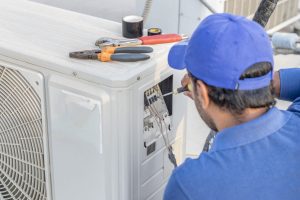
AC systems rely on capacitors to start and run the compressor and fan motors. A weak or failed capacitor is one of the most common reasons a unit won’t start at all, or starts and then shuts off shortly after.
What it looks like: A humming sound from the outdoor unit without the fan spinning, the system attempting to start and then clicking off, or tripped breakers when the AC tries to run.
Why this needs a professional: Capacitors store an electrical charge even when a system is powered off, which makes them dangerous to handle without proper training and discharge tools.
Why This Is More Noticeable in Branchburg Summers
Central New Jersey summers combine high heat with heavy humidity, which puts extra strain on cooling systems in two ways. First, high humidity means the air conditioner is working harder – it’s not just lowering temperature; it’s also pulling moisture out of the air, which is a significant part of an AC system’s cooling load. A system with any of the issues above (a dirty filter, low refrigerant, a struggling compressor) will show its weaknesses faster during a hot, humid stretch than it would in milder weather.
Second, many Branchburg homes run their systems for long, continuous stretches during peak summer months. That extended runtime means minor issues – a slightly dirty filter, a marginal refrigerant leak, a capacitor that’s starting to weaken – get compounded faster than they would with occasional use. A problem that might have been a minor inconvenience in spring can turn into a full system shutdown during a July heat wave.
Troubleshooting Steps to Try Before Calling for Repair
Before assuming the worst, a few checks can help you identify whether the issue is something simple or something that needs a technician:
- Check that the thermostat is set to “cool” and the target temperature is below the current room temperature
- Replace the air filter if it’s dirty or hasn’t been changed in the last 60–90 days
- Check the circuit breaker for the AC unit hasn’t tripped
- Look at the outdoor unit for visible debris, overgrown plants, or obstructions
- Look for ice on the indoor unit or refrigerant lines – if present, turn the system off and let it thaw fully
- Listen for unusual sounds (hissing, clicking, grinding, or humming without the fan spinning) from the outdoor unit
- Check that all supply vents in the home are open and unblocked by furniture or rugs
If you’ve gone through this list and the system still isn’t cooling – or if you notice ice, unusual sounds, hissing, or a tripped breaker – it’s time to call a professional rather than keep testing the system, since continuing to run a unit with a mechanical or electrical fault can turn a repairable issue into a more expensive one.
When to Call a Professional HVAC Technician
Some symptoms should prompt a call right away rather than more troubleshooting:
- Hissing or bubbling sounds, which can indicate a refrigerant leak
- Ice on the coil or lines that returns after thawing
- A breaker that trips repeatedly when the AC tries to start
- Grinding, screeching, or loud banging from the outdoor unit
- A burning smell from the indoor unit or vents
- The system running constantly without ever reaching the set temperature
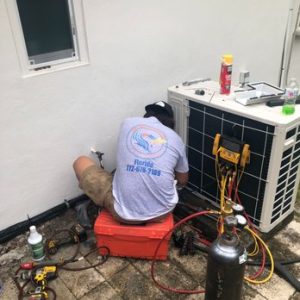
These symptoms typically point to refrigerant, electrical, or compressor issues – all of which involve components that require licensed handling, specialized tools, and, in the case of refrigerant, EPA-regulated procedures. Attempting to diagnose or fix these yourself risks personal injury or turning a repairable issue into a full system replacement.
What a Professional AC Repair Visit Typically Involves
A technician diagnosing a “not cooling” complaint generally starts by checking system pressures and refrigerant levels, inspecting electrical components like capacitors and contactors, examining the condition of the evaporator and condenser coils, and testing airflow through the ductwork and blower. From there, the specific repair depends on what’s found – whether that’s sealing and recharging refrigerant, replacing a failed capacitor or compressor part, clearing a blockage, or addressing a duct issue. If your system in Branchburg is showing any of the warning signs above, New Air Technology’s air conditioning repair services in Branchburg cover this full diagnostic and repair process.
Conclusion
New Air Technology an AC that’s running but not cooling usually comes down to one of eight common causes: a dirty filter, low refrigerant, a thermostat issue, a frozen coil, a struggling compressor, a blocked condenser, ductwork problems, or a failing capacitor. Simple checks like the filter, breaker, and thermostat settings can rule out the easy fixes in a few minutes. But if you’re hearing unusual sounds, seeing ice that keeps coming back, or dealing with a system that just won’t reach the set temperature, it’s a sign to bring in a professional rather than keep troubleshooting.
If your AC isn’t cooling your Branchburg home, call New Air Technology at (908) 373-8305 to schedule a diagnostic visit.
FAQs
Why is my AC running but not cooling the house?
This almost always points to one of a few causes: restricted airflow from a dirty filter, low refrigerant from a leak, a frozen evaporator coil, or a compressor that’s struggling to keep up. Checking the filter and looking for ice on the indoor unit are the two fastest ways to narrow it down before calling for repair.
Is it safe to run my AC if it’s blowing warm air?
It depends on the cause. If you’ve spotted ice on the coil or lines, turn the system off and let it thaw – running it in that state can damage the compressor. If you hear hissing, clicking, or grinding, or notice a tripped breaker, turn the system off and call a technician rather than continuing to run it.
How much does it cost to fix an AC that’s not cooling?
Cost varies significantly depending on the cause – a capacitor replacement is a relatively minor repair, while a refrigerant leak or compressor issue can be more involved. A technician can only give an accurate estimate after diagnosing the specific issue, since “not cooling” can stem from a wide range of problems.
Can a dirty air filter really stop my AC from cooling completely?
Yes, in severe cases. A heavily clogged filter can restrict airflow enough that the evaporator coil freezes over, which cuts off cooling almost entirely until the ice melts and the underlying airflow issue is resolved.
How often should I have my AC serviced to avoid these issues?
Most manufacturers and HVAC professionals recommend annual maintenance, typically in spring before peak cooling season starts. Regular maintenance catches issues like weakening capacitors, minor refrigerant loss, and dirty coils before they cause a full breakdown.