When a central air system starts losing ground on a sticky July afternoon, most Branchburg homeowners don’t want a lecture on refrigeration cycles. They want to know why the house is warming up and how fast someone can fix it. Air conditioning repair in Branchburg, NJ is one of those services people rarely think about until the living room is ten degrees warmer than the thermostat says it should be.
This guide walks through the real reasons AC systems fail in this part of Somerset County, what a technician actually checks during a repair visit, which problems you can safely look into yourself, and how to tell a routine repair from a genuine emergency. The goal is simple: help you understand what’s happening with your system and make a confident decision about what to do next, whether that means a quick fix or a call to a local HVAC repair services in Branchburg team.
Why Branchburg Homes Put Extra Strain on Air Conditioning Systems
Branchburg is a township of roughly 15,000 residents spread across a mix of older colonial and farmhouse-style homes near Neshanic Station and the Raritan River, along with newer subdivisions built over the last two to three decades. That mix matters more than people realize when it comes to cooling equipment.
Older homes in the township often still run ductwork that was sized for a smaller, less efficient system decades ago. When a homeowner upgrades to a larger, more efficient condenser without addressing that ductwork, the system ends up fighting restricted airflow every single cycle. That extra strain shows up as short cycling, weak airflow at the vents farthest from the unit, and compressors that wear out sooner than they should.
Newer construction has the opposite problem sometimes: bigger, more open floor plans and higher ceilings that create larger, harder-to-balance zones, especially in homes with bonus rooms over garages or finished walkout basements. Add in humid summer stretches pulled off the Raritan Valley, and both older and newer systems end up working overtime from June through September.
None of this means every AC problem in Branchburg is dramatic. It just means the local housing mix creates a wider-than-average range of issues, from simple electrical failures to airflow problems that take a trained eye to diagnose correctly.
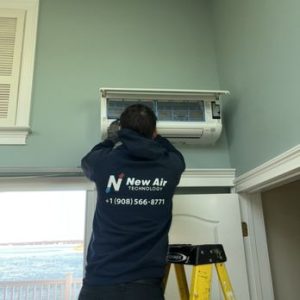
Signs You Need Air Conditioner Repair in Branchburg
Most AC failures don’t happen out of nowhere. There are almost always warning signs in the days or weeks before a full breakdown. Catching these early is the difference between a $150 fix and a $1,500 one.
- Warm or weak airflow from the vents. This usually points to a refrigerant issue, a failing compressor, or a badly clogged filter restricting airflow across the coil.
- The system runs constantly but never quite cools the house. Often a sign of low refrigerant charge or a coil that’s iced over and can’t transfer heat properly anymore.
- Short cycling. If the unit turns on and off every few minutes instead of running a full cooling cycle, a failing capacitor or a thermostat sensor problem is a common cause.
- Strange noises. Grinding, squealing, or a loud clicking at startup usually means a mechanical or electrical component, like a contactor or a fan motor bearing, is on its way out.
- Water pooling near the indoor unit. This is almost always a clogged condensate drain line, and it needs attention quickly before it damages flooring or drywall.
- A sudden jump in your electric bill. A struggling compressor or a refrigerant leak forces the system to draw more amperage to do the same job, and that shows up on your utility bill before it shows up as a full breakdown.
- Ice forming on the outdoor unit or refrigerant lines. This points to airflow restriction or low refrigerant, and running the system in this state can damage the compressor permanently.
If you’re noticing even one of these signs, it’s worth scheduling a diagnostic visit rather than waiting for total failure, especially heading into a heat wave.
Common Air Conditioning Repairs We See in Branchburg Homes
Repair calls tend to fall into a handful of recurring categories. Understanding which bucket your problem falls into helps set expectations before a technician even arrives.
Electrical Component Failures
Capacitors and contactors are two of the most commonly replaced parts in residential cooling systems, and for good reason. A dual-run capacitor helps start and keep the compressor and fan motor running; when it weakens (gradually with age and heat exposure), the system struggles to start or runs inefficiently. A pitted or worn contactor can cause a unit to hum without starting at all. These are usually quick, affordable fixes once diagnosed correctly.
Refrigerant Leaks and Low Charge
Refrigerants don’t get “used up” the way fuel does. If a system is low on refrigerant, there’s a leak somewhere in the line set, coil, or a fitting. A proper repair means finding and sealing the leak first, then recharging the system to the correct level, not just topping it off. Under EPA Section 608 rules, only certified technicians can legally handle refrigerants, which is one reason this repair should never be a DIY project.
Compressor Issues
The compressor is the heart of the outdoor unit, and it’s also the most expensive component to replace. Compressor failure is often the result of a problem that went unaddressed for months or years, like chronic low refrigerant, electrical strain, or restricted airflow. When a compressor fails on an older system, this is usually the point where a repair-vs-replace conversation becomes worth having.
Thermostat and Control Problems
Sometimes the outdoor and indoor equipment is working perfectly fine, and the actual issue is a miscalibrated or failing thermostat sending the wrong signal. This is one of the more affordable fixes and one reason a technician always checks controls before assuming a mechanical failure.
Clogged Condensate Drains
Algae, dust, and debris build up inside condensate drain lines over time, especially in humid months. A clogged line causes water backup, potential shutdowns (many systems have a safety switch that stops the unit when the pan overflows), and water damage if ignored.
Dirty Coils and Airflow Restriction
A dirty evaporator or condenser coil can’t transfer heat efficiently, which forces the whole system to work harder for a weaker result. This is one of the most preventable issues on this list and ties directly into regular maintenance.
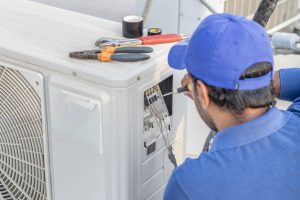
DIY Checks Before You Call an AC Repair Company
Not every warm house means a broken system. Before scheduling a service call, a few quick checks can rule out the simplest causes and save you time and money.
- Check the thermostat. Confirm it’s set to “cool,” the temperature is actually set below room temperature, and the batteries (if applicable) aren’t dead.
- Check the breaker panel. AC units run on dedicated circuits, and a tripped breaker is a common, harmless cause of a “dead” system.
- Inspect and replace the air filter. A clogged filter is one of the single biggest causes of weak airflow and system strain. Most residential filters need replacing every 1 to 3 months.
- Look at the outdoor unit. Make sure it’s clear of grass clippings, leaves, mulch, or overgrown shrubs. Restricted airflow around the condenser directly affects cooling performance.
- Check for a tripped condensate safety switch. If your system just stopped running, this is often the culprit, and it typically means the drain line needs clearing.
If none of these resolve the issue, or if you notice burning smells, sparking, or ice buildup, stop troubleshooting and call a licensed technician. Some issues, particularly anything electrical or refrigerant-related, aren’t safe or legal for a homeowner to handle directly.
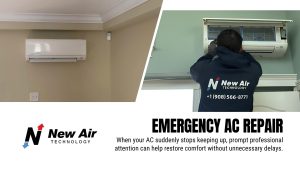
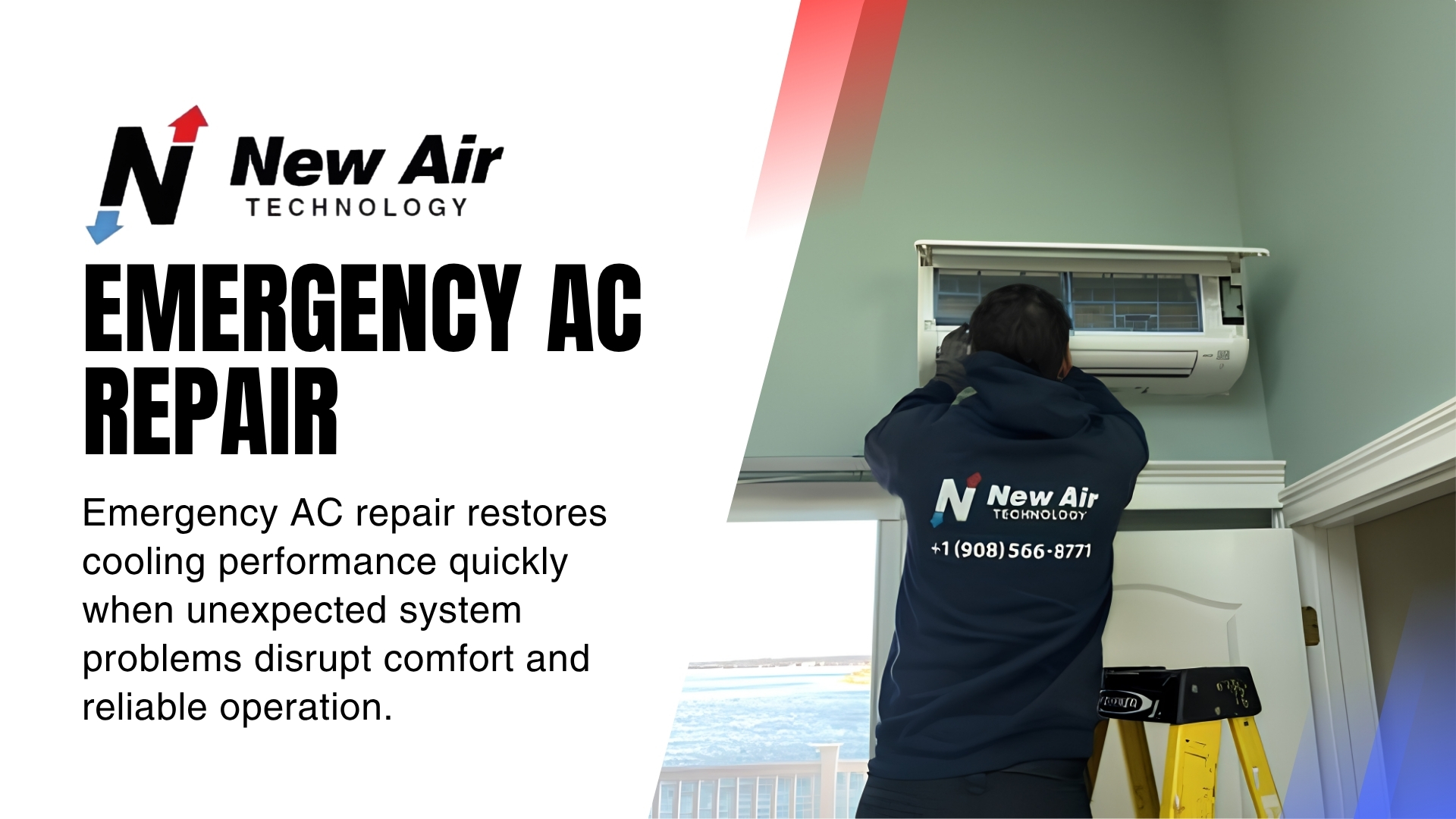
When It’s a True Emergency: Emergency AC Repair in Branchburg
Not every AC problem needs a same-day call, but some genuinely do. Here’s how to tell the difference.
Call for emergency AC repair in Branchburg if:
- There’s a burning smell, visible smoke, or sparking near the unit or thermostat.
- The system has completely stopped during a heat advisory, especially in a home with infants, elderly residents, or anyone with a heat-sensitive medical condition.
- You notice active water leaking that’s damaging flooring, ceilings, or nearby electrical outlets.
- The outdoor unit is making loud grinding or metal-on-metal noises, which can indicate imminent compressor or motor failure.
It can usually wait for a standard appointment if:
- The house is a few degrees warmer than normal, but the system is still running.
- Airflow is weak in one room but fine elsewhere.
- You’ve already resolved it
- temporarily with a filter change or breaker reset, and it’s holding steady.
A reputable HVAC repair company should be able to tell you over the phone which category your situation falls into and be transparent about response times rather than pushing every call as urgent.
How Much Does AC Repair Cost in Branchburg, NJ?
Cost is one of the most searched, least answered questions in this industry, and understandably so. Every system, home, and failure is different. That said, homeowners deserve real ranges instead of silence. These are general industry ranges, not a quote, since actual pricing depends on system age, refrigerant type, accessibility, and the specific parts involved. Always ask for a written estimate before work begins, and be wary of any company that won’t put pricing in writing.
Repair or Replace? A Simple Way to Decide
A widely used rule of thumb in the HVAC industry: multiply the age of your system by the estimated repair cost. If that number exceeds $5,000, replacement is usually the smarter long-term investment. A 12-year-old system needing a $1,000 compressor repair, for example, lands right at that threshold, especially when weighed against the efficiency gains of a modern SEER2-rated system. A 3-year-old system with the same repair need is almost always worth fixing.
What to Expect From a Professional AC Repair Visit
A properly done diagnostic visit isn’t guesswork. Here’s what a technician is typically checking, explained in plain terms:
- Electrical testing: Measuring amp draw on the compressor and fan motor to catch components pulling more power than they should, which signals early failure.
- Refrigerant charge check: Verifying the system has the correct refrigerant level for the outdoor temperature and system specs, not just “enough.”
- Static pressure and airflow testing: Confirming the ductwork and blower are moving the right volume of air. Too much resistance strains the whole system, even if every part is technically working.
- Capacitor and contactor inspection: Checking these components for wear, pitting, or weakened capacitance before they fail.
- Coil inspection: Looking at both the evaporator and condenser coils for dirt buildup, corrosion, or physical damage.
- Condensate drain inspection: Confirming the line is clear and the safety switch is functioning correctly.
A technician who walks you through these findings, in plain language, rather than just handing you a bill, is doing the job the way it should be done.
Choosing the Right HVAC Repair Company in Branchburg
With several HVAC companies serving Somerset County, it helps to know what actually separates a reliable one from the rest.
- Licensing and insurance. Confirm the company holds a valid New Jersey HVAC contractor license and carries liability insurance.
- EPA Section 608 certification. This is legally required for any technician handling refrigerant, and it’s a fair question to ask directly.
- Transparent, written estimates. A trustworthy company explains the diagnosis and gives you pricing before starting work, not after.
- Local presence and response time. A company based in or near Branchburg can typically respond faster than one dispatching from farther away, which matters most during a heat wave.
- Verified reviews. Look for consistent, detailed reviews across Google and other platforms, not just a handful of five-star ratings with no substance.
- Manufacturer and workmanship warranties. A company confident in its work will stand behind both the parts and the labor.
Preventive Maintenance Tips to Avoid Future AC Breakdowns
Most emergency repair calls trace back to something that could have been caught during routine maintenance. A few habits go a long way:
- Schedule a professional tune-up every spring, before peak cooling season begins.
- Replace air filters every 1 to 3 months, more often if you have pets.
- Keep at least two feet of clearance around the outdoor condenser unit.
- Have ductwork inspected periodically for leaks, especially in older Branchburg homes.
- Consider a programmable or smart thermostat to reduce unnecessary strain on the system.
- Address small issues (odd noises, minor leaks, slightly reduced airflow) as soon as you notice them, rather than waiting.
A system that’s properly maintained typically runs longer, uses less energy, and needs far fewer emergency repairs over its lifespan.
Why Homeowners in Branchburg Trust New Air Technology
New Air Technology has worked on cooling systems across Branchburg and the surrounding Somerset County towns, from older homes near Neshanic Station to newer developments closer to Route 22. Every repair follows the same process outlined above: full diagnostic testing, honest pricing, and a clear explanation of what’s actually wrong before any work begins.
Whether it’s a simple capacitor swap or a full system evaluation after a compressor failure, the goal is always the same: get the cooling restored the first time correctly.
If your system is showing any of the warning signs covered in this guide, reach out for a diagnostic visit before a small issue turns into an expensive one.
FAQ’s
How much does air conditioning repair cost in Branchburg, NJ?
Most repairs range from $150 for simple electrical fixes like a capacitor to $1,500 or more for refrigerant leak repairs. Compressor replacement typically runs $1,200 to $2,800+. Always request a written estimate before work begins, since exact pricing depends on your system and the specific issue.
How fast can I get emergency AC repair in Branchburg?
Most licensed local HVAC companies offer same-day emergency service, especially during heat waves. Response time depends on the company’s location and current call volume, so it’s worth asking directly how quickly a technician can arrive when you call.
Is it better to repair or replace an old AC unit?
A common rule of thumb: multiply the system’s age by the repair cost. If that number is above $5,000, replacement usually makes more financial sense. Systems under 10 years old are typically worth repairing rather than replacing.
Why is my AC running but not cooling the house?
This usually points to low refrigerant, a dirty coil restricting heat transfer, or a failing compressor. A dirty air filter can also cause this by restricting airflow. A diagnostic visit will confirm the exact cause.
How often should I get my AC serviced?
Most HVAC professionals recommend one professional tune-up per year, ideally in spring before cooling season starts. Regular maintenance catches small issues before they turn into costly emergency repairs.
Do I need a licensed technician for refrigerant issues?
Yes. Under EPA Section 608 regulations, only certified technicians are legally allowed to handle refrigerants. This isn’t a safe or legal DIY repair, and attempting it can cause further system damage.