/If you run a business, manage a commercial property, or oversee facilities in Branchburg, you already know that a working HVAC system isn’t a luxury. It’s what keeps employees productive, protects sensitive equipment, and keeps customers comfortable enough to stay. When a rooftop unit fails in July or a boiler struggles in January, the cost of downtime adds up fast. That’s why understanding commercial HVAC service in Branchburg before you need it, not after, puts you in a much stronger position when something goes wrong.
Branchburg sits at a unique crossroads. The township combines light-industrial parks along Route 22, corporate office campuses, medical and educational facilities, and a growing number of small retail strips. Each of these building types puts different demands on a mechanical system, and a one-size-fits-all approach to HVAC simply doesn’t hold up. This guide walks through what commercial HVAC repair, installation, and maintenance actually involves in this area, what New Jersey code requires, and how to evaluate a contractor before you sign a service agreement.
Why Commercial HVAC Systems in Branchburg Face Unique Demands
Commercial buildings don’t behave like residential ones. A single rooftop unit or chiller might be responsible for conditioning tens of thousands of square feet, spread across multiple zones with wildly different heat loads. A server room might need constant, aggressive cooling while an adjacent conference room sits mostly empty most of the day.
In Branchburg specifically, several factors make commercial HVAC service more demanding than in a typical suburban setting:
- Mixed-use building stock. The township has everything from older industrial buildings retrofitted for office use to newer corporate campuses, each with different ductwork layouts and equipment ages.
- Seasonal swings. Central New Jersey experiences humid summers and cold, damp winters, which stresses both cooling coils and heat exchangers throughout the year.
- Occupancy variability. Office parks and educational facilities see sharp swings in occupancy, from nearly empty on weekends to fully staffed on weekdays, which requires systems that can ramp up and down efficiently.
- Equipment density. Facilities with server rooms, labs, or manufacturing equipment generate heat loads that standard comfort cooling wasn’t designed to handle.
Because of this variability, a proper service approach starts with a full evaluation of airflow, static pressure, and zoning rather than a generic tune-up. Technicians typically measure supply and return airflow ratios across a building’s duct runs to identify hot spots before they become full system failures.
Signs Your Branchburg Business Needs Commercial HVAC Repair
Most commercial HVAC failures don’t happen without warning. The trouble is that early signs are easy to dismiss, especially in a busy facility where staff have other priorities. Catching these signs early is the difference between a same-day repair and a multi-day shutdown.
Watch for these common indicators that your building needs commercial HVAC repair:
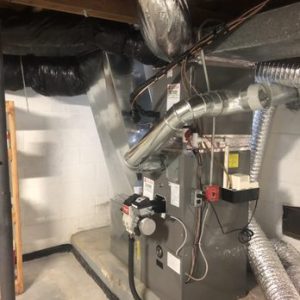
- Uneven temperatures between zones. If one wing of the building is consistently warmer or colder than another, it often points to duct imbalance, a failing damper, or a struggling zone controller.
- Rising utility bills without a change in usage. A system working harder than it should is usually losing efficiency somewhere, whether that’s a dirty coil, a refrigerant leak, or a failing compressor.
- Frequent short cycling. Equipment that turns on and off repeatedly instead of running full cycles wastes energy and accelerates wear on compressors and motors.
- Unusual noises from rooftop units. Grinding, rattling, or high-pitched squealing from an RTU often signals bearing wear, loose components, or motor strain.
- Weak or inconsistent airflow. This can point to a clogged filter, a failing blower motor, or blocked ductwork, and it’s often one of the first signs staff will notice.
- Higher humidity indoors. A cooling system that isn’t properly dehumidifying can point to a refrigerant charge issue or an oversized unit that’s short cycling before it can pull moisture from the air.
A qualified technician diagnosing commercial HVAC repair in Branchburg will typically test dual-run capacitors, check refrigerant charge against manufacturer specs, inspect the TXV valve for restriction, and measure compressor amp draw under load. These checks matter because they catch failures at the component level before they cascade into a full system replacement.
Commercial HVAC Installation in Branchburg: What to Expect
Whether you’re replacing an aging system or outfitting a new commercial space, installation is where long-term performance and energy costs are decided. Cutting corners here shows up later in the form of higher bills, uneven comfort, and premature equipment failure.
A proper commercial HVAC installation in Branchburg generally involves several stages:
Load Calculation and Equipment Sizing
Before any equipment goes on order, a contractor should run a full load calculation based on square footage, insulation values, occupancy patterns, and equipment heat gain. Oversized units short-cycle and waste energy. Undersized units run constantly and still fail to keep up during peak demand.
Equipment Selection
Most commercial buildings in this area use Packaged Rooftop Units (RTUs) because of their accessibility and ease of service. Choosing a unit with a modern SEER2 rating balances upfront cost against long-term energy savings, and matching indoor and outdoor components correctly is what allows the system to earn official AHRI certification.
Ductwork and Zoning
For multi-zone buildings, this stage includes mapping duct layouts to match actual usage patterns, not just the original building blueprint. Zoning dampers, VAV boxes, and economizers all get configured here to balance airflow across different areas.
Startup and Commissioning
A properly installed system gets commissioned, not just switched on. This means verifying refrigerant charge, testing safety switches, confirming voltage draw under load, and checking that airflow across every zone matches design specifications.
Businesses considering commercial HVAC installation should ask contractors directly about load calculations and AHRI-matched equipment. A contractor that skips these steps is setting the system up for problems within a few years, even if the install looks fine on day one.
Preventive Maintenance: The Real Key to Lowering Commercial HVAC Costs
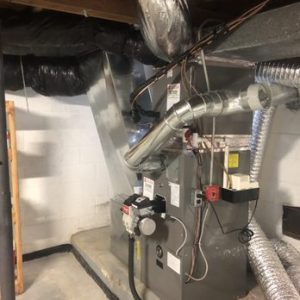
Reactive repair is the most expensive way to manage a commercial HVAC system. Every facility manager eventually learns this, usually after an emergency call on the hottest day of the year. A structured maintenance plan changes that dynamic by catching small issues before they become five-figure repairs.
A solid commercial HVAC maintenance visit typically includes:
- Cleaning and inspecting condenser and evaporator coils
- Testing electrical connections, contactors, and capacitors
- Calibrating thermostats and zone controllers
- Checking refrigerant charge and looking for early signs of leaks
- Replacing or cleaning filters on a set schedule
- Inspecting belts, bearings, and blower motors for wear
- Testing safety switches and verifying proper economizer operation
Beyond preventing breakdowns, regular maintenance directly affects energy costs. A system running with dirty coils or a low refrigerant charge can use significantly more electricity to deliver the same output. Over a full cooling season, that inefficiency shows up clearly on utility bills.
For most commercial buildings in Branchburg, a biannual maintenance schedule, once before cooling season and once before heating season, strikes the right balance between cost and system protection. Facilities with heavier equipment loads, like server rooms or manufacturing spaces, often benefit from quarterly checks instead.
Commercial HVAC Codes and Compliance in New Jersey
Compliance isn’t optional, and it isn’t just paperwork. New Jersey enforces mechanical and energy codes that directly affect how commercial HVAC systems must be designed, installed, and maintained.
Two frameworks matter most for commercial properties:
The International Mechanical Code (IMC), as adopted in New Jersey, governs ventilation rates, equipment clearances, combustion air requirements, and duct construction standards. Any new installation or major replacement needs to meet these baseline requirements, and inspectors will check for them before signing off on a permit.
ASHRAE ventilation standards set benchmarks for indoor air quality, particularly around minimum outdoor air exchange rates for different building occupancy types. Offices, medical facilities, and educational buildings each have different ventilation requirements under these guidelines, and a system that isn’t designed around them can leave a building with poor indoor air quality even if the temperature feels fine.
Working with a contractor who understands both frameworks matters more than most business owners realize. A system that passes a casual visual inspection can still fail to meet code on ventilation rate or clearance requirements, which becomes a real problem during an insurance audit, a lease transition, or a future permit application.
How to Choose the Right Commercial HVAC Contractor in Branchburg
Not every HVAC company that advertises “commercial services” actually has deep commercial experience. Residential and commercial systems differ enough in scale and complexity that the skills don’t always transfer cleanly. Before hiring a contractor for commercial HVAC service in Branchburg, it’s worth asking a few pointed questions.
A contractor who answers these questions clearly, without vague marketing language, is usually one who actually does the work described. Vague answers or pressure to sign immediately are red flags worth taking seriously.
Cost Factors for Commercial HVAC Service in Branchburg, NJ
Pricing for commercial HVAC work varies more than most business owners expect, and that’s not because contractors are being inconsistent. It’s because commercial systems vary enormously in scope. Still, understanding the main cost drivers helps you evaluate whether a quote is reasonable.
- Building size and zoning complexity. More square footage and more independently controlled zones mean more labor and equipment.
- Equipment tonnage and efficiency rating. Higher-efficiency units cost more upfront but typically reduce long-term operating costs.
- Ductwork condition. Older buildings sometimes need duct modifications or repairs alongside equipment work, which adds to the scope.
- Access and rooftop logistics. Crane access for rooftop unit replacement, roof structural considerations, and building height all affect labor costs.
- Code compliance updates. Older systems being brought up to current code sometimes require additional electrical or ventilation work.
- Service agreement scope. Maintenance plans that include priority emergency response and parts coverage cost more than basic seasonal tune-ups but often save money over time by preventing major failures.
The most reliable way to control costs isn’t necessarily choosing the cheapest quote. It’s choosing a contractor who explains these variables clearly and gives you a scope of work you can actually evaluate, rather than a flat number with no breakdown.
Finding “Commercial HVAC Repair Near Me” in Branchburg: What Actually Matters
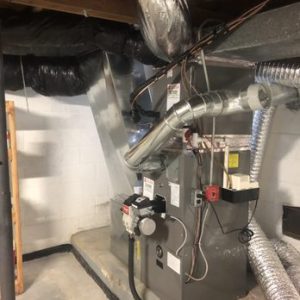
When a system fails and you’re searching for commercial HVAC repair near you in Branchburg, response time becomes the priority. But speed alone isn’t enough if the technician who shows up doesn’t have real commercial experience. A few practical factors matter more than how fast a company can answer the phone:
- Local familiarity. A contractor who regularly services buildings in Branchburg and the surrounding Somerset County area already understands common equipment types and typical building layouts in this region.
- Stocked service vehicles. Technicians carrying common commercial parts, capacitors, contactors, and control boards can often resolve issues on the first visit instead of waiting on parts.
- Diagnostic-first approach. A technician who tests before replacing components saves money and avoids unnecessary part swaps that don’t fix the actual problem.
- Clear documentation. Digital job tracking and post-repair testing reports give facility managers a paper trail for compliance and future reference.
Searching for a nearby provider makes sense in an emergency, but pairing that search with a maintenance relationship, rather than only calling when something breaks, tends to save businesses significantly more over time.
Conclusionx
Commercial HVAC systems in Branchburg carry a heavier workload than most business owners realize until something breaks. Between mixed-use building stock, seasonal humidity swings, and strict New Jersey code requirements, getting service, installation, and maintenance right takes more than a quick fix. Whether you’re dealing with an aging rooftop unit, planning a new installation, or simply trying to avoid another emergency repair call, the businesses that fare best are the ones that treat HVAC as an ongoing system to manage, not a problem to solve once and forget.
If your Branchburg facility is due for a system evaluation, repair, or replacement, working with a contractor who understands both the technical side and the local code requirements will save time, money, and stress in the long run.
FAQ’s
How often should a commercial HVAC system be serviced?
Most commercial buildings benefit from maintenance twice a year, once before cooling season and once before heating season. Facilities with heavy equipment loads, like server rooms, often need quarterly checks to prevent costly breakdowns.
How much does commercial HVAC installation cost in Branchburg, NJ?
Costs vary based on building size, zoning complexity, and equipment efficiency. A proper quote should include load calculations, equipment specs, and labor scope rather than a single flat number with no breakdown.
What’s the difference between commercial and residential HVAC service?
Commercial systems handle larger square footage, multiple zones, and higher heat loads from equipment or occupancy. They often use rooftop units, VAV systems, and economizers not found in typical residential setups.
What NJ codes apply to commercial HVAC systems?
New Jersey enforces the International Mechanical Code (IMC) along with ASHRAE ventilation standards, which govern airflow rates, equipment clearances, and indoor air quality requirements for commercial buildings.
What are signs my commercial HVAC system needs repair?
Watch for uneven temperatures between zones, rising energy bills, frequent short cycling, unusual rooftop unit noises, and inconsistent airflow. These often signal component failure before a full system breakdown.
How do I find reliable commercial HVAC repair near me in Branchburg?
Look for a contractor with local commercial experience, stocked service vehicles, a diagnostic-first repair approach, and clear documentation. Local familiarity with Branchburg’s building types often means faster, more accurate repairs.